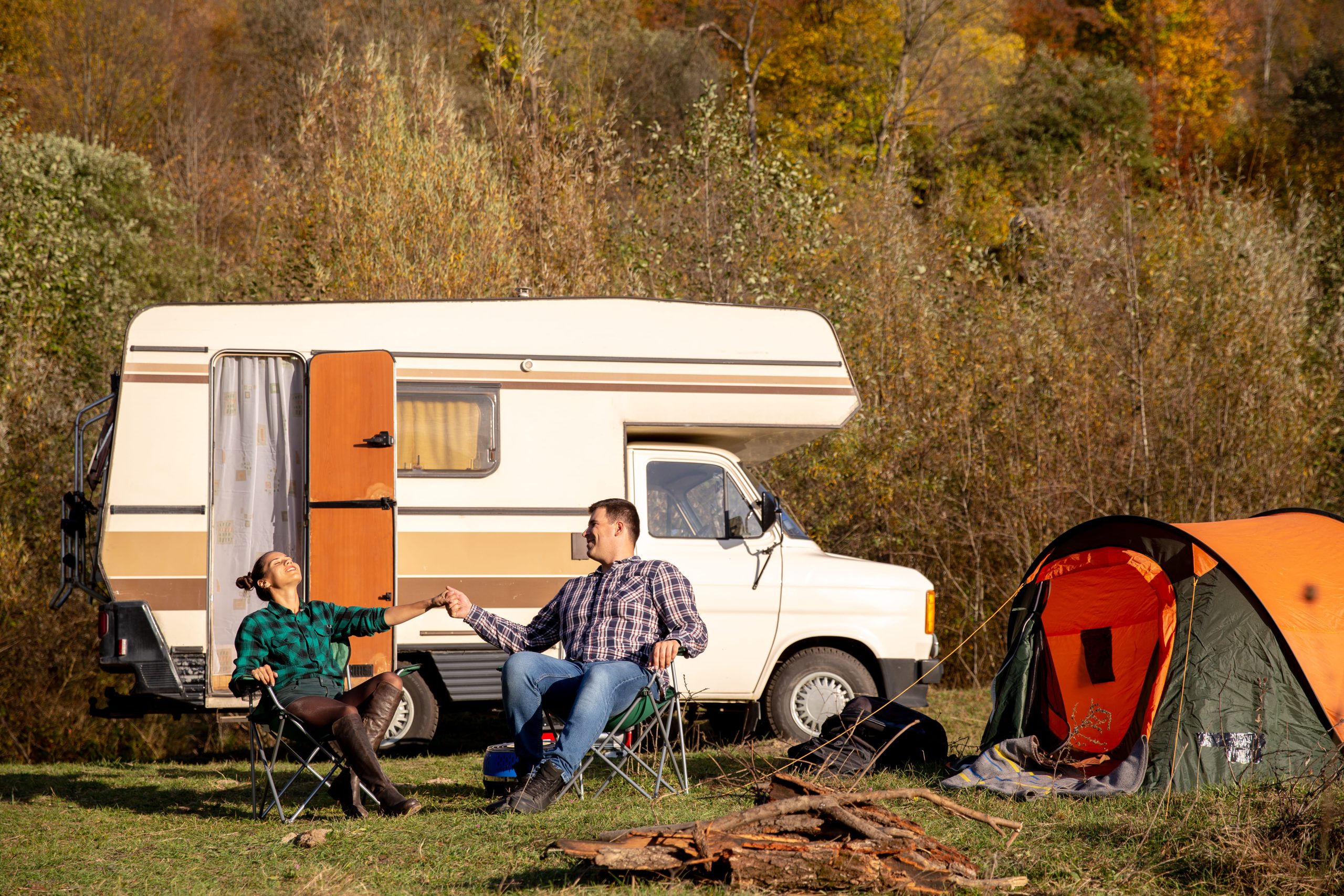
Summer planning often starts with one big question for anyone tempted by life on the road. When you weigh up a motorhome vs campervan, neither one wins outright. A campervan suits couples and solo travellers who want to park easily and change plans on a whim.
A motorhome rewards families and longer trips with proper space, a fixed bed and a washroom you do not have to share. The right call comes down to how you actually like to travel, so let us walk through it.
What really sets them apart
The simplest way to picture it is this. A campervan is a van that has been converted so you can sleep, cook and drive in the same compact body.
A motorhome is a larger, purpose built vehicle, usually coachbuilt, with separate areas for sleeping, cooking and relaxing. Both do the same job as a home from home. They just give you very different amounts of room to do it in.
Motorhome vs Campervan: What Really Sets Them Apart
Here is a quick side by side to make the differences clear.
| Feature | Campervan | Motorhome |
| Build | Converted van body | Larger coachbuilt vehicle |
| Best for | Solo travellers, couples | Families, longer touring |
| Driving and parking | Easy on narrow lanes | Needs more planning |
| Washroom | Rarely, or basic | Usually fixed toilet and shower |
| Sleeping | Fold-down bed | Fixed bed, more space |
| Running costs | Generally lower | Generally higher |
| Trip style | Short, flexible getaways | Longer, comfort led stays |
How you travel matters more than the badge
Before looking at layouts, think about who is coming and how long you will be away. Travelling solo or as a couple on short, spontaneous trips? A campervan slots into your life with very little fuss. Heading off for a fortnight with kids and a dog? The extra space in a motorhome quickly earns its keep.
After fifteen years of writing about leisure vehicles, I have watched plenty of owners start in a small camper, move up to a motorhome as the family grows, then drift back to a larger van once the children fly the nest.
Driving and parking on UK roads
Campervans are far kinder on narrow British lanes, tight coastal villages and ordinary car parks. You can pull up almost anywhere without much planning.
Motorhomes give you a commanding view and a smoother ride over distance, though you will think harder about height barriers, width and where you can realistically stop. If your summer road trip involves backroads and last-minute detours, the smaller footprint of a campervan is a real advantage.
Comfort, sleeping and washrooms
Here the motorhome pulls ahead. Most come with a fixed bed, a proper toilet and a shower, plus better heating for chilly UK mornings. Campervans rarely include a full washroom. Some have a cassette toilet or a simple tap fed shower, but it stays fairly basic. For one or two nights that hardly matters. For a week of wild camping or shoulder season touring, those creature comforts change the whole trip.
The licence question you cannot skip
This one catches people out, so check it early. Under the official UK driving licence categories set by the DVLA, a standard Category B car licence covers vehicles up to 3,500kg Maximum Authorised Mass, while anything between 3,500kg and 7,500kg calls for a Category C1 licence, and a full Category C beyond that. Most campervans and many smaller motorhomes sit under the limit, but larger coachbuilt and A-class models often tip over it.
Drivers who passed before 1 January 1997 usually hold C1 automatically, though it must be revalidated by a medical at 70. Always read the MAM on the V5C rather than the brochure, because driving over your entitlement can invalidate your insurance.
What each one costs to run
Campervans are generally the lighter touch on your wallet. They tend to be cheaper to buy, more economical on fuel and ferries, and kinder on road tax and insurance.
Motorhomes cost more across the board, and anything with a list price over £40,000 carries an added tax charge for the first few years. Set the purchase price aside, and the running costs still favour the smaller vehicle.
On the road in 2026
One fresh factor for this year is clean air. More UK cities have expanded their Low Emission and Clean Air Zones, and older pre-Euro 6 diesel motorhomes can face daily charges in some city centres. Newer vehicles, and most hire fleets, glide through without a second thought. It is worth checking the latest zone maps before you set off.
Buy or just hire for the summer?
If this is a one-off adventure rather than a lifestyle, hiring makes sense. You sidestep depreciation, insurance and storage, and off-peak weeks come in cheaper. It is also the smartest way to test whether a campervan or a motorhome genuinely suits you before committing thousands.
Picking your perfect summer ride
So when you settle the motorhome vs campervan debate, match the vehicle to your trip rather than the other way round. Short, flexible escapes for two point towards a campervan.
Longer family touring with comfort built in points towards a motorhome, with a larger campervan sitting neatly in the middle. Whichever way you lean, keep browsing Auto Square for honest, up to date buying guidance to help you hit the road with confidence this summer.

admin
Latest posts by admin (see all)
- Motorhome vs Campervan: Which Is Right for Your 2026 Summer Holiday? - August 13, 2026
- Tyre Pressure 101: How to Check It and Why It Saves You Fuel - August 7, 2026
- Summer vs Winter vs All-Season Tyres: Which Do UK Drivers Need? - July 28, 2026