Ever filled up more often than you expected and wondered where the money went? Quite often, the answer is sitting under your car. Getting your tyre pressure right is one of the simplest ways to check fuel waste and stretch every litre further.
Soft tyres quietly drag your engine down, and most drivers never notice until the pump bill creeps up. The good news is that a two-minute check, done properly, keeps your fuel economy healthy and your driving safer. Here is how it works and why it matters more than you might think.
The Slow Leak Nobody Spots
Tyres lose air all on their own, roughly one to two PSI a month, and temperature changes can also affect the reading. That is why checking them should be part of how you prepare your car for a road trip, especially before covering a long distance.
Here is the catch: a tyre can sit below its correct pressure and still look perfectly normal. You may not see it, but you can feel the effects at the pumps because underinflated rubber does not behave the way the manufacturer intended.
Why Soft Tyres Burn More Fuel
Think of riding a bike with half-flat tyres. Hard work, isn’t it? Your car faces the same problem. Underinflated tyres spread a wider footprint on the road, which creates drag, known as rolling resistance.
Your engine then has to work harder to keep you moving, and that extra effort comes straight out of your fuel tank.
Finding Your Correct Numbers
There is no single figure that suits every car, so always check yours. You will find the recommended pressure in three reliable places:
- Vehicle handbook, where the full range is listed for different loads
- Driver’s door sill, printed on a small sticker along the frame
- Fuel filler flap, tucked just inside on many models
It is quoted in PSI and bar. Look closely, and you will often spot a second, higher figure for a full load or towing. Heavier cars and electric vehicles usually run higher pressures too. One warning: never use the maximum number printed on the tyre sidewall, as that is not your everyday setting.
How to Check Your Tyre Pressure
The job itself is quiet simple.
- Check when the tyres are cold, either first thing in the morning or after the car has rested three to four hours.
- Note the correct figure for your vehicle and load.
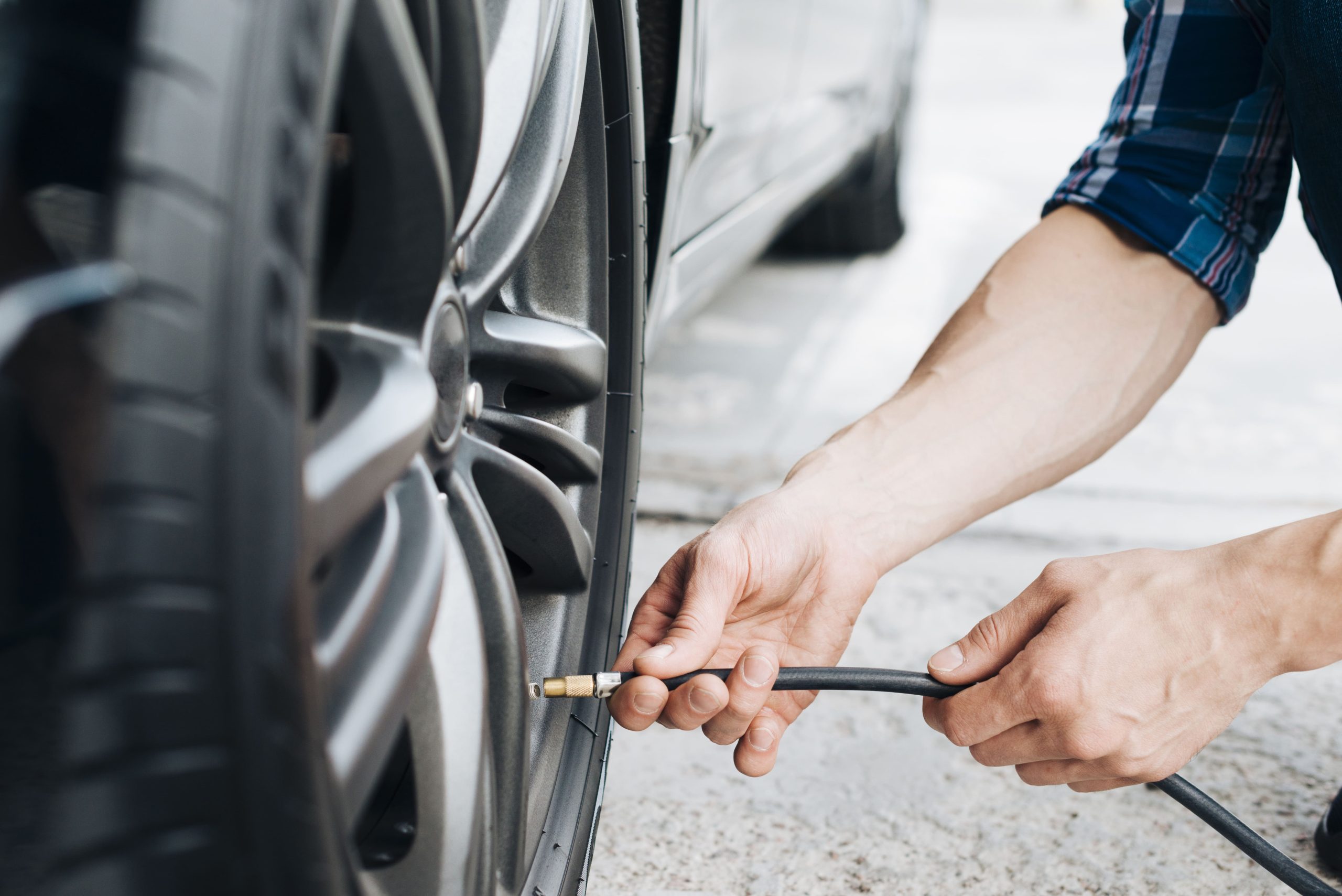
- Unscrew the valve cap and press your gauge, or the forecourt hose, firmly onto the valve stem until the reading settles.
- Compare it against the recommended pressure.
- Add air if it reads low, release a little if it reads high, then check again.
- Repeat on all four tyres, and give the spare a quick look while you are there.
- Refit the valve caps securely.
Most petrol station air pumps let you dial in the exact figure and even offer a rapid fill button. If a warning light was showing, it should clear on its own once everything is back where it belongs.
Mistakes Worth Avoiding
A few habits catch people out, and here is how they compare:
| Common Mistake | What Actually Happens |
| Checking hot tyres | Gives a falsely high reading |
| Over-inflating for “better MPG” | Less grip, harsher ride, faster centre wear |
| Ignoring the full load figure | Poor handling under heavy weight |
| Forgetting to reset after towing | Tyres stay overinflated for daily driving |
The manufacturer’s figure really is the sweet spot for fuel, grip and tyre life all at once.
While You Are There, Check the Tread
Since you are already crouched by the wheel, glance at the tread. The UK legal minimum is 1.6mm, though many drivers replace nearer 3mm for safety. No gauge handy? Pop a 20p coin into the groove. If the outer band disappears, you are fine. If it shows, it is time to book a garage visit.
A monthly tyre pressure check, plus one before any long journey, is all it takes. It protects your wallet, your tyres and everyone in the car. For more advice before your next trip, bookmark Auto Square and keep your driving sharp, safe and efficient.

admin
Latest posts by admin (see all)
- Motorhome vs Campervan: Which Is Right for Your 2026 Summer Holiday? - August 13, 2026
- Tyre Pressure 101: How to Check It and Why It Saves You Fuel - August 7, 2026
- Summer vs Winter vs All-Season Tyres: Which Do UK Drivers Need? - July 28, 2026